Demand Response and Your Smart Home: What Utilities Aren't Fully Explaining Before You Enroll

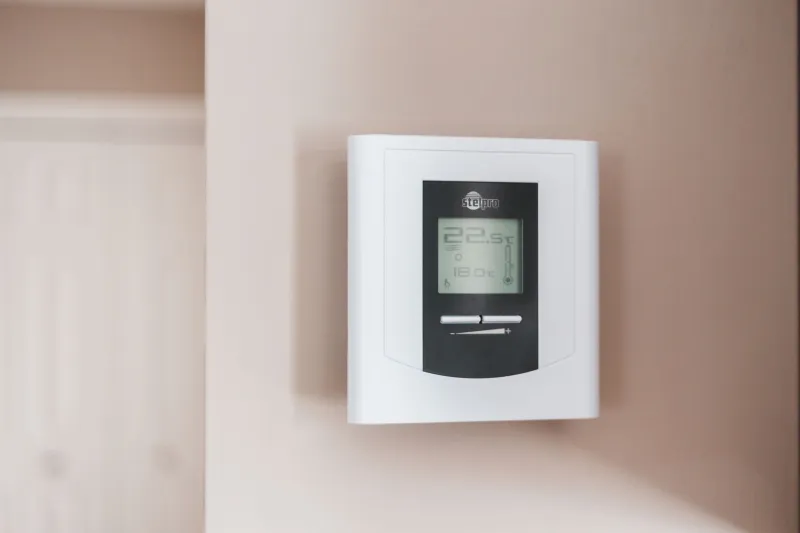
Photo: smart thermostat energy grid demand response utility, via thumbs.dreamstime.com
The relationship between your home's smart devices and the electrical grid is becoming considerably more complicated — and considerably more consequential for your monthly budget. Across the United States, utility companies are deploying programs that use smart thermostats, water heaters, EV chargers, and other connected appliances as distributed tools for managing grid demand. The pitch is straightforward: allow the utility to modestly adjust your device settings during high-demand periods, and receive bill credits or rebates in return.
What the enrollment brochures frequently underemphasize is the nuance embedded in that arrangement — the specific controls being transferred, the frequency and magnitude of potential adjustments, and the mechanisms by which you can opt out when the trade-off stops working in your favor.
What Demand Response Actually Means
Demand response is not a new concept in energy management. Utilities have offered large commercial and industrial customers financial incentives to reduce consumption during peak periods for decades. What is new is the extension of these programs to residential customers, enabled by the proliferation of smart devices that utilities can communicate with directly.
During a demand-response event — typically triggered by extreme heat or cold, unexpected generation shortfalls, or periods of very high wholesale electricity prices — participating devices are instructed to reduce their energy consumption. In practice, this most commonly means:
- A smart thermostat being adjusted by one to four degrees Fahrenheit for a period of two to four hours
- An electric water heater being temporarily prevented from running its heating cycle
- An EV charger being throttled or paused during the peak window
- Smart appliances such as dishwashers or dryers being delayed in starting a scheduled cycle
The utility communicates these instructions either directly to the device (in the case of utility-owned or utility-enrolled equipment) or through the device's cloud platform (in the case of consumer smart devices enrolled through programs like those offered by Enel X, Nest's Rush Hour Rewards, or Ecobee's utility partnership programs).
The Financial Case: Real Numbers
The financial incentives vary significantly by utility and program structure, but they are not trivial. Several programs currently operating in the US offer:
- Bill credits of $20 to $150 per season for thermostat participation, with the specific amount tied to the number of events and the degree of adjustment accepted
- Upfront equipment rebates of $50 to $100 or more on the purchase of a qualifying smart thermostat, provided as an incentive to enroll
- Time-of-use rate integration, where enrolled customers receive preferential pricing during off-peak hours in exchange for accepting adjustments during peak windows
- EV-specific programs offering credits of $50 to $200 annually for managed charging enrollment, particularly relevant in California, Texas, and states with high EV adoption rates
For a household running central air conditioning in a warm-climate state, seasonal thermostat participation credits alone can offset a meaningful portion of summer utility bills. The calculus is less favorable in mild-climate regions where demand events are infrequent.
What Control You Are Actually Giving Up
This is the dimension of demand-response enrollment that deserves the most careful scrutiny before signing up. The degree of utility control varies substantially by program type.
Direct load control programs are the most interventionist model. In these arrangements — common with utility-owned smart water heaters and some older thermostat programs — the utility has direct, unmediated control over the device during an event. Your ability to override may be limited or may result in forfeiture of the event's credit.
Consumer-device partnership programs, such as those operated through Nest, Ecobee, or Honeywell Home platforms, typically offer more consumer-friendly terms. The utility sends an event notification to the device platform, which implements the adjustment — but the homeowner retains the ability to override the adjustment at any time through the device's app or physical interface. Overriding may reduce or eliminate the credit for that specific event, but it does not typically affect future participation.
Voluntary event programs operate on an opt-in-per-event basis, where the utility notifies you of an upcoming event and you choose whether to participate. These offer the greatest consumer control but generally the lowest per-event compensation.
Before enrolling, locate and read the program's terms of service — not just the marketing summary. Key questions to answer: How many events per year can the utility call? What is the maximum adjustment magnitude? What is the override mechanism, and does overriding carry a financial penalty?
Evaluating Device Compatibility
Not every smart device in your home is eligible for demand-response enrollment, and compatibility is not always obvious. The most reliable path to determining eligibility is to check directly with your utility, which will maintain a list of qualifying devices and platforms.
As a general framework, devices most commonly supported by US demand-response programs include:
- Smart thermostats: Ecobee, Google Nest, Honeywell Home (T6 Pro, T9, T10), Emerson Sensi — all have established utility partnership networks
- Smart water heaters: Rheem EcoNet-connected models and A.O. Smith iCOMM-connected models are among the most widely enrolled
- EV chargers: ChargePoint, Enel X JuiceBox, and Ford/GM OEM charging solutions participate in managed-charging programs in many markets
- Battery storage systems: Powerwall and other home battery systems increasingly participate in virtual power plant programs, particularly in California
Standard smart plugs, smart bulbs, and most smaller IoT devices are generally not enrolled in formal demand-response programs, though some utilities are piloting broader device integration.
Maximizing Rebates While Protecting Comfort
The households that extract the most value from demand-response participation are those that approach enrollment strategically rather than passively.
Pre-cool or pre-heat before events. Most smart thermostat platforms, and many utility program apps, provide advance notice of upcoming demand events — often 24 hours or more. Using this window to pre-condition your home (cooling it to 70°F before a 74°F event adjustment, for example) can make the adjustment period entirely comfortable.
Enroll multiple eligible devices. If your utility offers credits for both thermostat and water heater participation, enrolling both maximizes your return without meaningfully compounding the inconvenience.
Review your event history. Most program platforms maintain logs of past events, including the magnitude of adjustments and the credits earned. Reviewing this history annually allows you to assess whether the program's terms remain favorable as your household's needs evolve.
Understand exit conditions. Most programs allow disenrollment with 30 days' notice or less. If a program's event frequency or adjustment magnitude increases in ways that affect your comfort, disenrollment is a legitimate and straightforward option.
The Broader Picture
Demand-response programs represent a genuine alignment of interests between utilities managing an increasingly strained grid and homeowners seeking to reduce their energy costs. The smart home devices already present in millions of US households make residential participation more practical than it has ever been.
The appropriate posture is neither reflexive skepticism nor uncritical enrollment. It is the same posture this publication recommends for every technology decision: read the terms carefully, understand the mechanisms, quantify the trade-offs, and retain the ability to adjust your participation as circumstances change. The grid may be getting smarter, but the most important intelligence in this equation remains yours.