What Free Apps Actually Cost You: A Smart Guide to Data Privacy in 2025
There's an old saying in the tech world: if you're not paying for the product, you are the product. In 2025, that axiom has never been more accurate — or more nuanced. The free apps sitting on your smartphone aren't charity projects. They're businesses, and their most valuable inventory is the behavioral, demographic, and location data they quietly collect from you every single day.
This isn't a call to delete everything and retreat from modern technology. Rather, it's an invitation to become a more informed participant in the data economy — one who understands the trade-offs and makes deliberate choices accordingly.
The Business Model Behind 'Free'
When a developer releases a free app, they need a revenue stream. The most transparent approach is advertising, but the more lucrative — and far less visible — model involves data monetization. Here's how it typically works:
An app collects data points about its users: your precise GPS location, browsing habits, purchase history, contacts, app usage patterns, and even how long you linger on certain screens. This information is aggregated, often anonymized (though true anonymization is harder to guarantee than most companies admit), and then sold or licensed to data brokers, advertisers, and third-party analytics platforms.
Data brokers — companies like Acxiom, LiveRamp, and Oracle Data Cloud — act as middlemen, packaging your behavioral profile and selling it to retailers, insurance companies, political campaigns, financial institutions, and more. According to the Federal Trade Commission, the data broker industry generates billions of dollars annually in the United States alone.
Real-World Examples Worth Examining
Weather apps are among the most egregious data collectors, precisely because their core function — displaying a five-day forecast — requires almost no personal information at all. Yet many popular weather apps request continuous access to your precise location, which they then sell to advertisers seeking geo-targeted marketing opportunities. A 2019 investigation by The New York Times revealed that at least 75 companies received precise location data from a single weather app used by millions of Americans. The underlying mechanics haven't changed significantly since then.
 Photo: The New York Times, via facademap.cbe.berkeley.edu
Free productivity tools, including certain note-taking and to-do list apps, frequently monetize usage metadata. How often you open the app, what types of tasks you create, when you're most active — all of this feeds into behavioral profiles that help advertisers understand your lifestyle, stress levels, and purchasing intent.
Flashlight apps and utility tools were among the earliest offenders. Many requested access to contacts, microphone, and location data with no plausible functional justification. While app store policies have tightened since the early smartphone era, the category still warrants scrutiny.
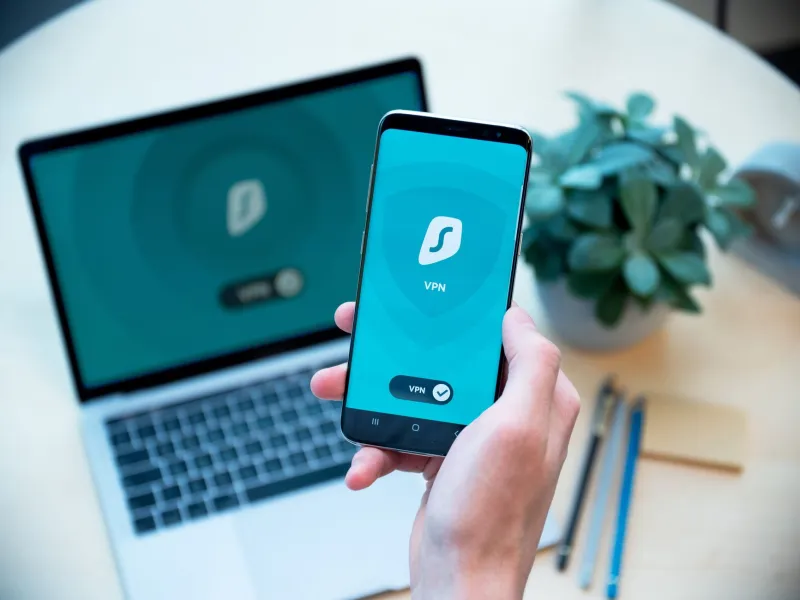
Free VPN services present a particularly ironic case. Users install them specifically for privacy, yet several well-documented free VPNs have been caught logging user traffic and selling browsing data — the very behavior their users were trying to avoid.
What Data Is Being Collected — and Who Buys It
The categories of data most commonly harvested by free apps include:
- Location data: Precise GPS coordinates, movement patterns, and home/work address inference
- Device identifiers: Advertising IDs, device model, operating system version
- Behavioral data: App usage duration, tap patterns, scroll behavior, and in-app actions
- Demographic inferences: Age, income bracket, political affiliation, and health interests derived from behavior
- Contact and social graphs: Who you communicate with and how frequently
The buyers are equally varied. Retailers use location data to understand foot traffic and competitor visits. Health and life insurance companies have shown interest in inferred lifestyle data. Political consultants purchase demographic and behavioral profiles for targeted outreach. Hedge funds have reportedly bought aggregated app usage data to predict consumer trends before quarterly earnings reports.
How to Evaluate Whether an App Is Worth the Trade-Off
Not every free app is a privacy liability, and a blanket refusal to use ad-supported software is neither practical nor necessary. The smarter approach is a structured evaluation before you install anything new.
Step 1: Read the permissions request critically. When an app asks for access to your location, microphone, contacts, or camera, ask whether that permission is genuinely necessary for the app's stated function. A recipe app has no legitimate need for your contacts. A meditation app doesn't require your precise location.
Step 2: Review the privacy policy for data-sharing language. Look specifically for phrases like "trusted third-party partners," "service providers," and "affiliated companies." These are often euphemisms for data broker relationships. The presence of such language doesn't automatically disqualify an app, but it signals you should proceed with awareness.
Step 3: Check the app's revenue model. If an app is free, has no premium tier, and carries no advertising, ask yourself how it sustains development. Data monetization is frequently the answer.
Step 4: Use tools designed to help you. On iOS, the App Privacy Report (found under Settings > Privacy & Security) shows you which apps have accessed your data and contacted external domains. On Android, the Permission Manager provides similar visibility. Third-party tools like DuckDuckGo's App Tracking Protection can block trackers running inside other apps.
Step 5: Consider paid alternatives for sensitive use cases. For apps that handle health data, financial information, or communications, the cost of a paid alternative is often modest compared to the value of the data you'd otherwise be surrendering. A $2.99/month weather app that explicitly commits to a no-data-sale policy is a reasonable exchange for peace of mind.
A Note on Regulatory Context
The United States currently lacks a comprehensive federal data privacy law equivalent to Europe's GDPR. However, several states — including California (via the CCPA and CPRA), Virginia, Colorado, and Texas — have enacted consumer data protection legislation that grants residents rights to access, delete, and opt out of the sale of their personal information. Knowing your state's protections is a useful part of your overall privacy strategy.
The FTC has also increased enforcement activity around deceptive data practices in recent years, and proposed federal privacy legislation continues to advance through Congress. The regulatory landscape is shifting, but meaningful federal protections remain inconsistent.
Making Peace With the Data Economy
The goal here isn't paranoia — it's proportionality. A free flashlight app that accesses your location deserves skepticism. A free podcast player that serves you ads based on genre preferences is a fairly benign arrangement. Developing the ability to distinguish between these scenarios is what separates a reactive user from an informed one.
The apps you install are, in a very real sense, financial decisions. You're either paying with dollars or paying with data. Neither option is inherently wrong, but both deserve the same deliberate consideration you'd bring to any other spending choice. In 2025, that kind of digital literacy isn't optional — it's essential.