Cloud vs. Local: Choosing the Smart Home Architecture That Actually Matches Your Priorities
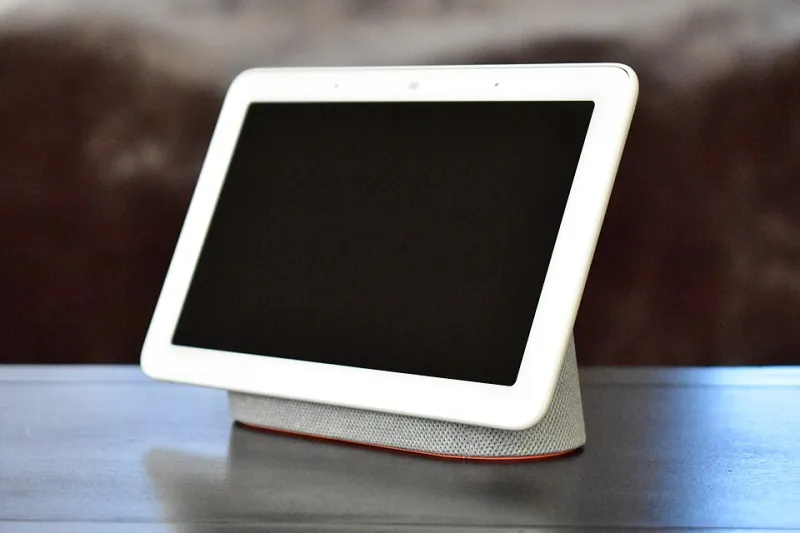
Photo: Y2kcrazyjoker4, CC BY-SA 4.0, via Wikimedia Commons
Most smart home buyers focus on features: which devices integrate with which platforms, how responsive the app is, whether the thermostat has a good-looking interface. Very few ask the question that determines all of those outcomes at a foundational level: where does the intelligence actually live?
That question — local processing versus cloud dependency — is the defining architectural choice in the current smart home market, and the answer has implications that reach far beyond convenience. It affects your privacy, your resilience during internet disruptions, your long-term costs, and ultimately how much control you actually have over the hardware you purchased.
Defining the Two Architectures
Cloud-dependent systems route device commands, automation logic, and data through manufacturer servers. When you ask Google Home to turn off the kitchen lights, that instruction typically travels from your phone or speaker to a Google server and back to your hub before the light responds. The intelligence — the rules, the integrations, the voice processing — lives off-site. This model enables rich features, easy setup, and seamless cross-device coordination. It also means your home's functionality is contingent on your internet connection, the manufacturer's server uptime, and that company's continued investment in the platform.
Local-first systems perform command processing, automation execution, and device communication within your home network. Matter over Thread, Apple HomeKit with a local hub, and self-hosted platforms like Home Assistant are the primary examples in the current US market. Commands execute without leaving your network. Automations run whether your internet is up or not. Data stays on your hardware unless you explicitly choose to share it.
The reality for most households is a hybrid: some devices operating locally, others requiring cloud connectivity. Understanding the tradeoffs helps you make intentional choices about which category each device falls into.
Performance: Where Local Processing Wins Clearly
Response latency is the most immediately perceptible difference between the two approaches. A light switch command processed locally typically executes in under 100 milliseconds. The same command routed through a cloud server — traversing your router, your ISP, the manufacturer's infrastructure, and back — introduces latency that is variable and dependent on conditions outside your control. On a good day, the difference may be imperceptible. During peak internet traffic hours, server maintenance windows, or periods of ISP congestion, cloud-routed commands can feel sluggish or fail entirely.
For basic lighting and plug control, this distinction may seem academic. For security automations, alarm triggers, or door lock commands, response time is not academic at all.
Automation reliability tells a similar story. Local automation engines execute rules based on device states they can observe directly, without polling a remote server. A cloud-dependent automation that triggers your porch light when your front door sensor detects motion will fail silently if the cloud platform experiences an outage — a scenario that has affected Google Home, Amazon Alexa, and SmartThings users on multiple documented occasions.
Privacy: The Data Flow Question
Cloud-dependent architectures are, by design, data collection architectures. Every command, every device state change, every pattern of use is transmitted to and stored on manufacturer servers. This data has commercial value: it informs product development, enables personalization features, and in some cases funds the platform through targeted advertising or data licensing.
The relevant question for US consumers is not whether this data collection is legal — it generally is, under current federal frameworks — but whether it aligns with your personal comfort level and risk tolerance. A household that uses voice-activated lights, smart locks, and occupancy sensors is generating a detailed behavioral profile: when you wake up, when you leave, when you return, which rooms you occupy and when. That profile lives on servers you do not control, governed by privacy policies that can change.
Local-first architectures fundamentally change this dynamic. HomeKit Secure Video, for example, processes video analysis on a local Apple TV or HomePod hub before any data is transmitted. Matter devices operating over Thread communicate within your local network without requiring cloud intermediation for basic functions. Home Assistant, running on a local server, can be configured to never make an external network request.
This does not mean local systems are entirely private — many still offer optional cloud features, and firmware updates require external connections — but the default data exposure is dramatically lower.
Resilience: What Happens When the Internet Goes Down
The United States experiences approximately 440,000 power and internet outages annually, and residential broadband reliability varies significantly by region and provider. For households in areas with frequent outages, or simply for anyone who values a home that functions predictably, resilience is a practical concern rather than a theoretical one.
Cloud-dependent smart homes typically degrade to manual operation during internet outages. Automations stop. Voice control fails. App control may be unavailable. Physical switches and buttons continue to work, but the intelligence layer goes dark.
Local-first systems maintain full functionality during internet outages because the intelligence layer never left your home. A Home Assistant installation with a local Zigbee or Z-Wave coordinator will continue executing automations, responding to sensors, and accepting app commands over your local Wi-Fi network regardless of whether your ISP connection is active.
For households with security systems, medical monitoring devices, or elderly residents who depend on automated routines, this distinction carries real weight.
Long-Term Costs and Platform Risk
Cloud dependency introduces a category of financial risk that is easy to overlook at purchase time: platform mortality. The smart home industry has a documented history of manufacturers discontinuing cloud services, pivoting away from consumer products, or being acquired and restructured. When a cloud-dependent platform shuts down, the hardware it powered typically becomes inoperable or severely limited — regardless of how recently you purchased it.
Logitech Harmony, Insteon, Wink, and SmartThings have all undergone service changes or shutdowns that left users with degraded or non-functional hardware. In each case, the devices themselves were physically intact. The cloud layer that gave them intelligence was simply gone.
Local-first hardware, particularly devices built on open standards like Zigbee, Z-Wave, or Matter, can be migrated to alternative platforms when a manufacturer exits the market. The hardware retains its value because its functionality is not contingent on any single company's continued operation.
A Framework for Deciding
The right architecture is not universal. It depends on your technical comfort, your privacy priorities, your household's tolerance for complexity, and the specific use cases you care about most.
Choose cloud-dependent systems if: you prioritize easy setup and maintenance, you value rich voice assistant integration, and you are comfortable with the data trade-offs involved. Google Home and Amazon Alexa ecosystems remain the most accessible entry points for most US households.
Choose local-first systems if: you experience frequent internet disruptions, you have strong privacy preferences, you want your devices to remain functional regardless of manufacturer decisions, or you are technically comfortable managing a slightly more complex setup.
Build a deliberate hybrid if: you want the convenience of cloud features for low-sensitivity devices while keeping security cameras, locks, and occupancy sensors on local processing. This is increasingly achievable as Matter adoption expands and local hub options mature.
The smart home market is moving — slowly but measurably — toward architectures that support local processing as a baseline. Understanding where that line sits today, and where it is heading, is what allows you to invest in hardware that will still be serving you five years from now.