Smart Thermostats Promised to Cut Your Energy Bills — Here's the Honest Math
Smart Thermostats Promised to Cut Your Energy Bills — Here's the Honest Math
The pitch is almost irresistible: install a $150–$250 device, let it learn your schedule, and watch your heating and cooling costs drop. Manufacturers like Google (Nest) and Ecobee have built substantial businesses on that promise, and millions of American households have bought in. But the question worth asking — before the thermostat goes on the wall — is whether the savings are real, who else benefits from the data your home generates, and whether the math actually works in your favor.
This guide examines all three of those questions with the seriousness they deserve.
What the Energy Savings Data Actually Shows
Let's start with the headline claim. Google states that Nest thermostats save users an average of 10–12% on heating bills and roughly 15% on cooling bills. Ecobee cites a similar figure — around 23% in annual savings compared to a hold-at-72°F baseline. Independent research has been somewhat more measured. A 2020 study published by the American Council for an Energy-Efficient Economy (ACEEE) found that smart thermostat savings in real-world conditions typically range from 8% to 15%, depending heavily on climate zone, home size, and how the device is configured.
For an average American household spending approximately $1,000 per year on heating and cooling — a figure drawn from the U.S. Energy Information Administration — that translates to somewhere between $80 and $150 in annual savings. Over a device lifespan of five to seven years, that's a reasonable return on a one-time hardware purchase, assuming you don't pay a monthly subscription fee.
That last assumption, however, is increasingly worth scrutinizing.
Subscription Costs: The Fee Nobody Talks About at the Register
Ecobee's more advanced features — including SmartSecurity, extended historical data access, and certain remote monitoring tools — sit behind a subscription tier that runs approximately $99 per year. Nest's premium features are bundled into Google Home and Google One subscriptions, which start at $2.99 per month. Neither of these fees is prominently displayed on retail packaging.
If your annual energy savings amount to $100 and you're paying $99 for a subscription, the financial case for a smart thermostat collapses almost entirely. The calculation only holds up if you optimize the device properly, take advantage of available utility rebates, and either avoid premium tiers or use features that genuinely justify the cost.
Utility rebates, it should be noted, can significantly improve the math. Many U.S. utility providers — including Pacific Gas & Electric, Xcel Energy, and various regional co-ops — offer rebates between $25 and $100 for smart thermostat purchases. The Database of State Incentives for Renewables & Efficiency (DSIRE) at dsireusa.org maintains an up-to-date directory of available programs by state. Checking this resource before purchasing can meaningfully reduce your break-even timeline.
What Your Thermostat Is Learning About You
Here is where the conversation shifts from financial planning to something more fundamental: the data trade-off embedded in every smart home device.
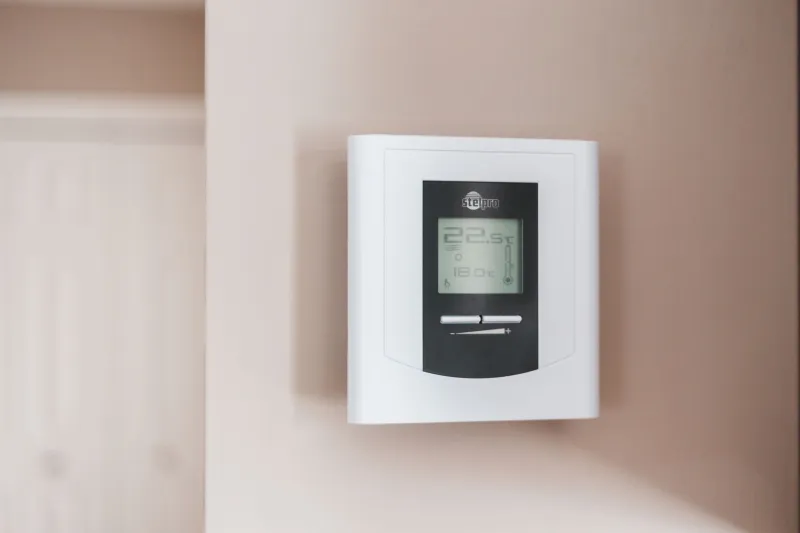
A smart thermostat is, at its core, a behavioral sensor. It tracks when you wake up, when you leave for work, when you return, and when you go to sleep. Over time, it builds a detailed occupancy profile of your household. Nest's privacy policy confirms that it collects "data about your home, such as temperature, humidity, and occupancy." Ecobee's policy similarly acknowledges collecting "occupancy data, home/away status, and comfort preferences."
This information is used to improve scheduling algorithms — which is the legitimate, user-facing purpose. But it is also retained on company servers, associated with your account, and subject to data-sharing arrangements that most users never read.
Google's privacy framework, which governs Nest devices, permits the use of device data to improve Google's broader services. Ecobee has faced scrutiny over its participation in utility demand-response programs, in which your thermostat can be remotely adjusted during peak energy periods — a feature that requires sharing occupancy and usage data with third-party utility partners. This program, called Ecobee Donate Your Data, is opt-in, but the default settings and enrollment prompts are not always transparent.
Who Else Receives Your Data?
Beyond the manufacturer, several additional parties may receive information from your smart thermostat:
- Utility companies: Through demand-response programs, utilities may receive real-time usage and occupancy signals.
- Insurance companies: At least one major U.S. insurer has piloted programs that incorporate smart home device data into home insurance pricing models.
- Advertising platforms: Google's data use policies allow aggregated and anonymized device data to inform advertising products, though the company states individual thermostat data is not used for ad targeting.
- Law enforcement: Like any connected device, smart thermostats can be subject to subpoenas or court orders requesting stored data.
None of this makes a smart thermostat inherently dangerous. But it does mean that the device is not a neutral appliance — it is a data collection endpoint that operates continuously inside your home.
How to Maximize Savings While Limiting Your Exposure
The good news is that a thoughtful approach to configuration can preserve most of the financial benefits while reducing your data footprint considerably.
1. Disable cloud-based learning features and use manual schedules. Both Nest and Ecobee allow users to input fixed schedules rather than relying on machine learning. This eliminates the need for continuous occupancy monitoring while still delivering the core benefit: running your HVAC less when no one is home.
2. Opt out of data-sharing programs explicitly. Navigate to your device's privacy settings — not just the app's general settings — and disable any participation in third-party data programs, including demand-response and behavioral analytics features.
3. Avoid premium subscription tiers unless you use the features actively. The base functionality of most smart thermostats — scheduling, remote adjustment, and basic energy reporting — is available without a subscription. Paying for a tier you rarely use erodes your savings margin.
4. Claim your utility rebate before calculating ROI. Apply for available rebates through your utility provider's website or through the manufacturer's rebate portal at the time of purchase. This single step can reduce your effective hardware cost by 15–40%.
5. Review your privacy policy annually. Both Google and Ecobee update their data use terms periodically. Setting a calendar reminder to review your account's data-sharing settings once per year is a low-effort habit that keeps you informed.
The Bottom Line
Smart thermostats can deliver genuine energy savings — but only under the right conditions, and only when configured with intention. For a household in a climate with significant seasonal temperature swings, a well-programmed thermostat paired with a utility rebate can realistically pay for itself within two to three years. For a household in a mild climate paying a monthly subscription fee and leaving default settings in place, the financial case is far weaker.
The data privacy dimension is real but manageable. These devices do collect meaningful behavioral information, and that data does flow to third parties in various forms. Understanding that reality — and taking the steps outlined above — puts you in a fundamentally better position than the average buyer who installs the device, accepts the defaults, and assumes the savings will take care of themselves.
A smart thermostat, used intelligently, is a reasonable investment. Used passively, it is an expensive sensor that may or may not pay its way. The difference between those two outcomes is almost entirely within your control.