When Your Smart Home's Brain Goes Dark: How to Survive a Hub Shutdown

When Your Smart Home's Brain Goes Dark: How to Survive a Hub Shutdown
In 2023, Wink — once one of the most recognizable names in consumer smart home technology — quietly faded from relevance after years of service interruptions, surprise subscription fees, and dwindling support. Users who had spent hundreds of dollars wiring their homes around Wink's hub were left scrambling. Some devices became entirely non-functional. Others required full replacement. The experience was neither unique nor isolated.
From Insteon's abrupt shutdown in 2022 to Samsung SmartThings steadily scaling back its hardware ambitions, the smart home industry has accumulated a notable graveyard of discontinued platforms. For homeowners who invested time, money, and trust into these systems, the fallout is rarely minor. Understanding why this keeps happening — and how to insulate yourself from it — is one of the more consequential decisions a smart home buyer can make.
Why Smart Home Platforms Fail More Often Than They Should
The smart home market attracted enormous venture capital interest throughout the 2010s, and many of the platforms that emerged during that era were built on optimistic growth projections rather than sustainable business models. A hub sold at cost — or even at a loss — only makes financial sense if the company can monetize users over time through subscriptions, data, or premium services. When that monetization fails to materialize, the math collapses quickly.
The problem is compounded by the intense competition in the space. Amazon, Google, and Apple have effectively commoditized the voice assistant layer of the smart home, making it difficult for smaller players to differentiate on features alone. When a startup cannot compete on scale and cannot sustain itself on hardware margins, shutdown becomes a matter of when, not if.
This dynamic is not hypothetical. Insteon, which operated for nearly two decades, shut down without warning in April 2022. Customers woke up one morning to find that their hubs — and every device connected to them — had stopped responding. There was no advance notice, no transition plan, and no refund mechanism.
Red Flags to Watch Before You Commit to Any Platform
Not every platform is equally vulnerable, but several warning signs are worth examining before you build a meaningful portion of your home around any single hub.
Venture funding without a visible revenue model. If a company's primary product is a hub sold at a low price point and there is no clear subscription tier, premium service, or enterprise offering generating recurring revenue, ask how the lights stay on. Investor capital is not indefinite.
Thin or declining community activity. Active user forums, regular third-party integrations, and a healthy developer ecosystem are strong indicators of platform longevity. Conversely, a community forum with months-old posts, unresolved bug reports, and no developer activity is a signal worth taking seriously.
Proprietary device lock-in. Some hubs are designed to work only with the manufacturer's own branded devices, or with a narrow set of certified partners. This architecture maximizes the damage when a shutdown occurs, because your devices may not be compatible with any alternative platform.
Infrequent or abandoned software updates. A hub that has not received a meaningful firmware update in twelve months is a hub that may not have an engineering team behind it anymore. Check release notes and update histories before purchasing.
Opaque corporate ownership. Several smart home brands have been quietly acquired by holding companies with no stated commitment to ongoing development. If the company behind your hub is difficult to identify or has changed hands recently without public communication, that warrants additional scrutiny.
What Actually Happens to Your Devices When a Hub Goes Dark
The specific consequences of a platform shutdown depend largely on how that platform was architected. Cloud-dependent hubs — those that route commands through the manufacturer's servers even for local functions — are the most vulnerable. When the servers go offline, the hub becomes inoperable regardless of whether your local network is functioning perfectly.
Locally processed hubs fare considerably better in shutdown scenarios. If the hub's logic runs on your own hardware and does not require an external server to function, it may continue to operate indefinitely after a company closes, though you will lose access to app updates, cloud-based automations, and remote access.
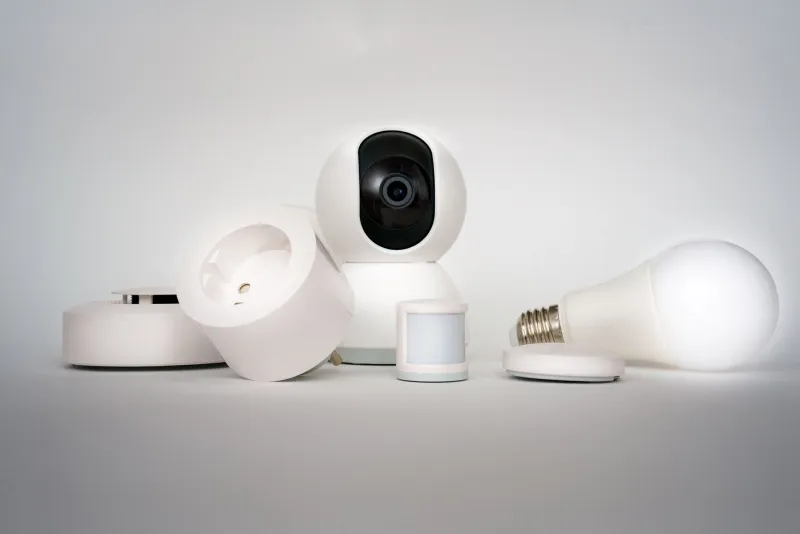
Zigbee and Z-Wave devices occupy a more favorable position than Wi-Fi-only smart devices, because those protocols are open standards. A Zigbee bulb that was paired with a discontinued hub can, in most cases, be re-paired with a new hub that supports the same protocol. Wi-Fi devices that relied on a proprietary app or cloud integration are typically far more difficult to migrate.
Building a More Resilient Smart Home From the Ground Up
The most effective protection against platform collapse is reducing single points of failure in your ecosystem. That means making deliberate choices at the device and hub level, rather than defaulting to whatever a retailer prominently displays.
Prioritize open standards. Matter, the cross-industry smart home standard backed by Apple, Google, Amazon, and Samsung, was designed specifically to reduce platform dependency. Devices certified for Matter can be controlled across multiple ecosystems simultaneously, which significantly reduces the risk that any one company's exit will render your hardware useless.
Choose hubs with local processing. Home Assistant, running on local hardware such as a Raspberry Pi or a dedicated mini-PC, processes automations entirely on your network. There is no cloud dependency, no subscription, and no single corporate entity whose financial health determines whether your lights turn on in the morning. The setup requires more technical investment than a plug-and-play hub, but the resilience trade-off is substantial.
Diversify your device protocols. Avoid building an entire home around a single wireless protocol controlled by one manufacturer. A combination of Matter-certified devices, Zigbee hardware, and a small number of Wi-Fi devices gives you flexibility to migrate without replacing everything if one segment of your ecosystem becomes unsupported.
Document your configuration. If you ever need to migrate platforms, knowing exactly which devices you own, which protocols they use, and how your automations are structured will save considerable time. Maintain a simple inventory — a spreadsheet is sufficient — and update it whenever you add or remove hardware.
Watch the news on your platform. Corporate acquisitions, layoffs in engineering teams, and changes to subscription pricing are often early indicators of platform instability. Following technology news outlets and your platform's official community channels costs nothing and can provide meaningful advance warning.
The Smarter Way to Think About Hub Investment
A smart home hub is not simply a gadget — it is infrastructure. Treating it with the same level of scrutiny you would apply to any other long-term infrastructure decision is not excessive caution; it is proportionate judgment.
The platforms that have demonstrated the most durability are those backed by companies with diversified revenue streams, strong developer communities, and — increasingly — commitment to open standards that do not depend on any single corporate actor remaining solvent. That list is shorter than the marketing materials for any given product might suggest, but it does exist.
Building around proven standards and locally processed logic will not make your smart home immune to every disruption. But it will ensure that when the next Wink or Insteon moment arrives — and history strongly suggests it will — your home keeps working while everyone else's goes dark.