Making Peace With Your Mixed Smart Home: A Practical Playbook for Multi-Ecosystem Living
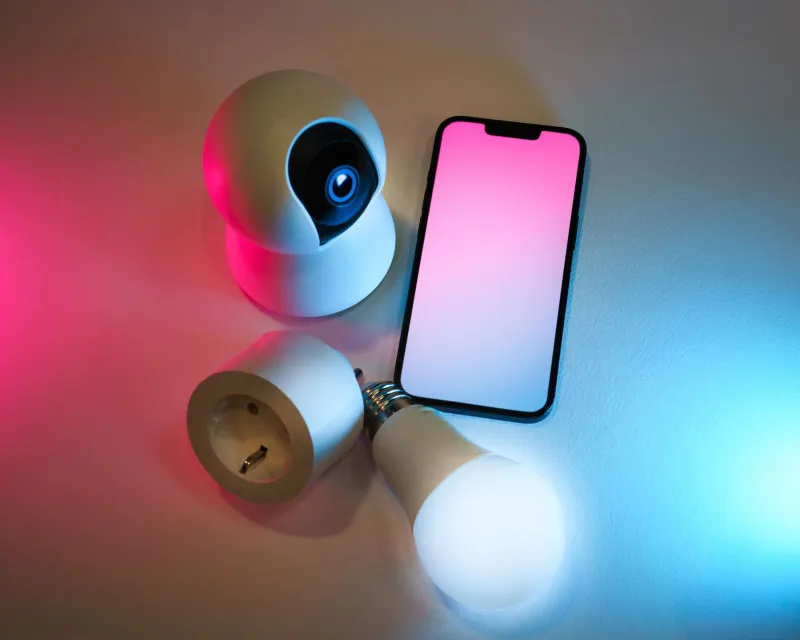
Very few households set out to build a multi-ecosystem smart home. It happens incrementally. An Amazon Echo arrives as a holiday gift. An iPhone-owning family member adds a few HomeKit devices. A Google Nest thermostat gets installed because it was on sale and the reviews were strong. Samsung SmartThings enters the picture because it was bundled with a new appliance. Before long, four separate apps govern four separate slices of a home that was supposed to be unified.
This is not a niche situation. It is arguably the most common smart home configuration in the United States today, and the industry's response — the Matter standard — remains only a partial solution in 2025. For the millions of households living in this fragmented reality right now, a more immediately actionable playbook is needed.
Accepting the Reality Before Solving It
The first mistake most multi-ecosystem households make is attempting to consolidate everything into a single platform. This instinct is understandable. A unified app, a single voice assistant, one automation engine — it sounds cleaner. In practice, forced consolidation usually means abandoning devices that work perfectly well, or accepting that some percentage of your hardware will perform worse in its non-native ecosystem.
A more pragmatic starting point is accepting that your home will remain multi-ecosystem for the foreseeable future, and optimizing for interoperability rather than elimination. The goal is a home that functions seamlessly across platforms, not a home that runs on only one.
Mapping Your Ecosystem Landscape
Before making any configuration changes, document which devices live in which ecosystem. This inventory should capture the platform each device is natively registered to, whether it supports Matter or Thread, and whether it currently has any cross-platform integrations in place.
This exercise frequently surfaces redundancies — two voice assistants in the same room, two separate motion sensors covering the same zone — and gaps where no ecosystem has strong coverage. Both are useful findings.
Once your map is complete, identify which platform you want to treat as your primary automation engine. This does not mean every device will live there natively. It means that the most complex automations — the multi-step routines that involve devices from multiple platforms — will be authored and managed there.
Choosing Your Primary Automation Hub
The four major consumer platforms each have meaningful strengths and meaningful limitations when used as a primary hub in a mixed environment.
Apple Home offers the strongest privacy architecture and the tightest integration with iOS and macOS devices. Its automation capabilities have improved significantly with recent updates, but it remains less flexible than competing platforms for complex conditional logic. It is the strongest choice for households where iPhone and iPad are the primary control interfaces and privacy is a top priority.
Google Home has broad device compatibility and strong natural language processing through Google Assistant. Its automation scripting capabilities have historically lagged behind competitors, though the platform has invested in improvement. It performs well in households with Android-primary users and those already embedded in Google's broader ecosystem.
Amazon Alexa offers the widest device compatibility of any major platform and the most mature third-party skill ecosystem. Its routine-building interface is approachable for non-technical users, and its local processing capabilities have expanded in recent hardware generations. It is a strong choice as a primary hub for households prioritizing breadth of device support.
Samsung SmartThings is the most technically capable of the four for complex automation scenarios, supporting more sophisticated conditional logic and offering the strongest local processing options. It has a steeper learning curve but rewards users who invest in understanding it. It is the best choice for power users managing large device counts across multiple protocols.
For households that want maximum cross-ecosystem control without committing to any single manufacturer's platform, third-party options like Home Assistant deserve serious consideration. It is not a commercial product, but its open-source architecture and extensive integration library make it the most flexible hub available — at the cost of meaningful technical investment.
Bridge Devices: The Connective Tissue of a Mixed Home
For devices that do not natively support your chosen primary platform, bridge devices provide the connective layer. Several tools have emerged as reliable options in this space.
Homebridge is a software bridge that runs on a local server (a Raspberry Pi, a spare Mac, or a NAS device) and exposes non-HomeKit devices to Apple Home through virtual accessories. It has an extensive plugin library covering most major device brands and is actively maintained. For Apple Home users with non-native hardware, it is the most reliable bridging solution available.
Amazon Echo hubs with Zigbee support can directly pair with Zigbee devices from multiple manufacturers, bypassing the need for proprietary hubs. This significantly reduces the number of physical hub devices required in a mixed environment.
Matter bridges — now shipping from several manufacturers including Philips Hue, IKEA, and Aqara — expose legacy Zigbee and Z-Wave devices to Matter-compatible platforms. As Matter adoption expands, these bridges will become increasingly valuable for households with older device inventories.
Designing Automations That Span Ecosystems
The most frustrating limitation of multi-ecosystem homes is that native automation engines generally cannot trigger actions in competing platforms. An Apple Home automation cannot directly control a Google Nest device. An Alexa routine cannot natively trigger a SmartThings automation.
Several approaches address this limitation.
Virtual switches are the most widely used workaround. A virtual switch — a software-only toggle with no physical hardware — can be created in one platform and exposed to another through a bridge. When Platform A toggles the virtual switch, Platform B detects the change and responds with its own action. It is inelegant, but it is reliable.
IFTTT (If This Then That) remains a viable option for simple cross-platform triggers, though its free tier is now limited and its reliability has been inconsistent. For non-critical automations where occasional failure is acceptable, it retains utility.
Home Assistant, if you have deployed it, eliminates this problem almost entirely. Its integration library covers virtually every major platform, and its automation engine treats all connected devices as first-class citizens regardless of their native ecosystem.
Managing Costs in a Multi-Ecosystem Home
The financial dimension of multi-ecosystem living deserves honest acknowledgment. Running multiple platforms means multiple app subscriptions in some cases, multiple hub devices consuming power continuously, and the ongoing cost of maintaining integrations that break when manufacturers push firmware updates.
Conduct an annual audit of your hub hardware and any associated subscription costs. Eliminate hubs for platforms that are no longer actively serving devices. Consolidate where genuine consolidation is possible without sacrificing functionality. The goal is not to spend less on smart home technology indiscriminately — it is to ensure that every dollar spent is delivering proportionate value.
The Long View on Ecosystem Convergence
Matter's promise — a universal smart home standard that eliminates the ecosystem problem at the device level — is real, but its full realization remains a work in progress. Device support is expanding, and the major platforms have committed to ongoing investment. Within three to five years, a genuinely Matter-first home will be a realistic option for new buyers.
For households already invested in existing hardware, the bridge strategies and automation workarounds described in this guide represent the practical path forward. Multi-ecosystem living is not a failure state — it is the current reality for most American smart home users. Managed deliberately, it is entirely workable.