Convenience Has a Price Tag You Never Agreed To: How Smart Devices Monetize Your Daily Life
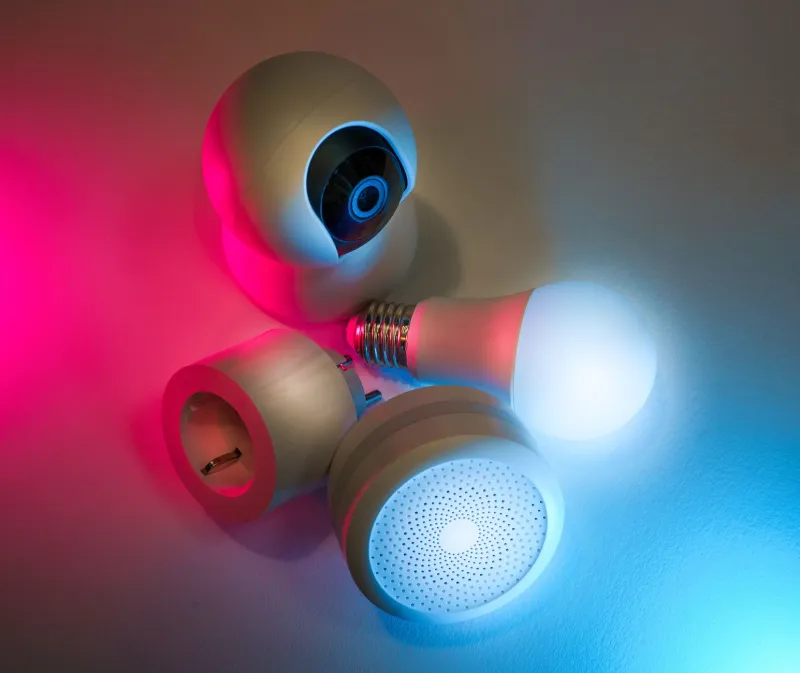
There is a well-worn observation in technology circles: if you are not paying for the product, you are the product. What is less frequently discussed is the corollary — even when you do pay for the product, you may still be the product. The smart devices sitting in your living room, on your wrist, and mounted beside your front door are, in many cases, generating revenue for their manufacturers long after the purchase transaction is complete. The mechanism is your behavioral data, and the market for it is considerably larger than most consumers realize.
What "Connected" Really Means for Your Privacy
The term "smart device" is, in practical terms, a synonym for "data-collecting device." Connectivity is the feature that makes these products useful — and it is also the feature that makes them commercially valuable to manufacturers beyond the initial sale price.
Consider three of the most common categories of connected devices in American households:
Fitness Trackers and Wearables Devices such as Fitbit (now owned by Google), Garmin, and various Apple Watch competitors continuously log biometric data: heart rate, sleep cycles, blood oxygen levels, menstrual cycles, stress indicators, and physical activity patterns. This is not merely wellness data — it is an extraordinarily detailed behavioral and physiological profile. Fitbit's privacy policy, for instance, permits the company to share anonymized or aggregate data with third-party partners, including researchers and advertisers. Following Google's acquisition, that data sits within one of the most sophisticated advertising ecosystems in the world. Analysts at the research firm RAND Europe have estimated that health and fitness data can carry a per-user annual value of between $40 and $200 depending on the granularity and the purchasing industry — with health insurers, pharmaceutical companies, and wellness advertisers among the most active buyers.
Smart Doorbells and Security Cameras Ring, owned by Amazon, and its competitors collect video footage of your home's exterior, your comings and goings, and — critically — the movement patterns of your household and visitors. Ring's documented history with law enforcement partnerships raised significant public concern: between 2018 and 2022, Ring provided footage to police departments without user consent in response to emergency requests, a practice that was eventually restricted following congressional scrutiny. Beyond law enforcement, the metadata generated by smart doorbells — when you leave, when you return, how often you have visitors — constitutes behavioral intelligence with commercial applications. Amazon's broader ecosystem benefits directly from this data, informing delivery timing, household composition modeling, and targeted advertising.
Voice Assistants Amazon Alexa, Google Assistant, and Apple's Siri each record audio clips when triggered, and in some documented cases, when they are not. Amazon has acknowledged that human reviewers listen to a subset of Alexa recordings to improve accuracy. More commercially significant, however, is the transactional and behavioral data generated through voice assistant interactions — what you search for, what you purchase, what routines you establish. Amazon has been transparent that Alexa is partly a commerce engine: the device is, among other things, a frictionless purchasing interface designed to increase Amazon spend per household.
Putting a Dollar Figure on Your Data
The abstract concept of "data monetization" becomes considerably more concrete when expressed in financial terms. Several independent research efforts have attempted to quantify the per-user annual value of consumer behavioral data:
- Advertising data brokers such as Acxiom and Oracle Data Cloud compile consumer profiles that are licensed to marketers. Industry estimates place the average American consumer profile at a value of approximately $240 per year across all data types.
- Health and biometric data commands a significant premium. A 2023 report from the Duke University Sanford School of Public Policy found that data brokers were openly selling sensitive health inferences — including conditions inferred from wearable data — for as little as $0.26 per record, with bulk purchases reaching millions of profiles.
- Location and behavioral data from smart home devices has been valued by cybersecurity researchers at $35 to $150 per user annually when aggregated across a typical connected household.
These figures do not represent money you receive. They represent the value extracted from your behavior and transferred to third parties — often without your meaningful awareness, buried in terms of service that average consumers rarely read in full.
The Terms of Service Problem
The legal framework governing data collection is, for most users, functionally invisible. Privacy policies for major smart device manufacturers routinely run to 10,000 words or more. A 2022 study published in the Journal of Consumer Affairs found that reading all the privacy policies an average American encounters in a year would require approximately 76 work days. The result is a system of nominal consent that functions, in practice, as no consent at all.
Key clauses to be aware of include:
- "Affiliated companies" sharing provisions: Most policies permit data sharing with corporate subsidiaries and partners, which in the case of Amazon or Google means an extraordinarily broad ecosystem.
- "Anonymized" data caveats: Data described as anonymized has been repeatedly demonstrated to be re-identifiable. A 2019 MIT study showed that four location data points are sufficient to uniquely identify 95% of individuals in a dataset.
- "Improve our services" language: This phrase frequently serves as a broad license for using your data in training machine learning models, which may then be licensed or commercialized separately.
A Practical Framework for Evaluating the Trade-Off
Not all smart devices represent equivalent privacy risks, and not all users have identical privacy thresholds. The following framework is designed to help you make an informed decision before your next purchase — or to reassess the devices already in your home.
Step 1: Identify what data the device collects. Before purchasing, search for the device's privacy policy and look specifically for the data collection section. Categorize the data types: behavioral, biometric, location, audio/video, or transactional. The more sensitive the category, the higher the inherent risk.
Step 2: Assess the manufacturer's data-sharing ecosystem. A standalone company with a single product line presents a very different risk profile than a device manufactured by a company whose primary business is advertising (Google, Amazon, Meta). The latter has both the infrastructure and the financial incentive to extract maximum commercial value from your data.
Step 3: Evaluate whether the device can function without cloud connectivity. Some smart devices — certain thermostats, local-processing security cameras, and Wi-Fi routers running open-source firmware — can operate with minimal or no cloud dependency. These represent a meaningfully lower data exposure.
Step 4: Weigh the genuine utility against the data cost. A fitness tracker that motivates consistent exercise and provides actionable health insights may represent a reasonable trade-off for users who understand what they are sharing. A smart doorbell that streams footage to a corporation's servers with a history of law enforcement data sharing may not — particularly if a standard video doorbell without cloud storage meets the same functional need.
Step 5: Apply the substitution test. Ask whether a non-connected alternative exists that meets 80% of your functional requirement. If it does, the remaining 20% of "smart" functionality is the premium you are paying for — in data.
The Informed Consumer's Advantage
The smart device market is not going to retreat from data collection voluntarily. The economics are too favorable, and the regulatory environment in the United States — unlike the European Union's GDPR framework — does not impose sufficiently stringent constraints on most of these practices. What has changed, however, is the availability of information. Device-specific privacy audits, tools like the Mozilla Foundation's Privacy Not Included guide, and increasing investigative journalism coverage of data broker practices mean that a genuinely informed purchasing decision is now possible.
Smart technology, used thoughtfully, delivers real value. The goal is not to reject connectivity wholesale but to engage with it on terms you have consciously evaluated — rather than terms you accidentally accepted by clicking "I Agree" during setup. In that sense, the most intelligent upgrade you can make to your smart home may not be a new device at all. It may simply be reading what you already agreed to.