Thread, Matter, and the End of the Fragmented Smart Home: What Every US Buyer Needs to Know Now
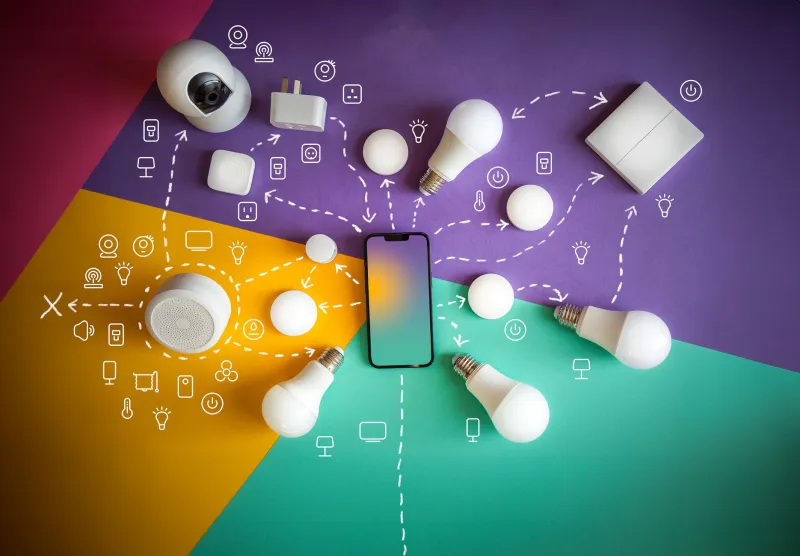
For years, building a smart home in the United States meant making a bet. You picked an ecosystem — Amazon Alexa, Google Home, Apple HomeKit — and quietly accepted that anything outside that walled garden might never fully cooperate. Bulbs that refused to sync. Locks that only responded to one app. Automations that broke the moment you added a device from a competing brand. The fragmentation was exhausting, and for most consumers, largely invisible.
That era is not over yet. But it is ending. And the two standards responsible for that shift — Matter and Thread — deserve far more attention than they currently receive in mainstream tech coverage.
What Matter Actually Is (And What It Isn't)
Matter, which launched publicly in late 2022 under the Connectivity Standards Alliance, is best understood as a shared language. It is an application-layer protocol — meaning it governs how devices identify themselves, communicate their capabilities, and respond to commands — rather than a radio technology. A Matter-certified smart plug, for instance, can be added to an Apple Home setup, a Google Home setup, or an Amazon Alexa setup without requiring separate firmware or a proprietary bridge.
What Matter does not do is replace the underlying radio technology your devices use to transmit data. That distinction matters enormously, and it is where Thread enters the picture.
Thread: The Network Layer Most People Have Never Heard Of
Thread is a low-power, IPv6-based mesh networking protocol designed specifically for smart home devices. Unlike Wi-Fi, which requires every device to maintain a direct connection to your router, Thread creates a self-healing mesh — devices relay signals to one another, meaning a sensor on your back porch can communicate through your living room speaker and your kitchen thermostat to reach the rest of your network. Remove one node, and the mesh reroutes automatically.
Unlike Bluetooth, Thread does not require proximity to a hub or phone to function. It operates continuously in the background, with dramatically lower power consumption than Wi-Fi — a critical advantage for battery-operated sensors, door locks, and environmental monitors.
Here is what makes this particularly significant: Apple, Google, Amazon, and Samsung have all embedded Thread Border Routers — the devices that bridge your Thread mesh to your broader IP network — into their current hardware. The HomePod mini, the Apple TV 4K, the Nest Hub Max, the Echo 4th generation, and the SmartThings Station all function as Thread Border Routers. If you own any of those devices, you already have Thread infrastructure in your home, whether you knew it or not.
Why This Combination Changes the Reliability Equation
The practical consequence of pairing Matter (shared language) with Thread (resilient mesh network) is a smart home that behaves more like a utility and less like a science project.
Consider what happens when your internet connection goes down under older architectures. Cloud-dependent devices stop responding entirely. Automations fail. Voice commands time out. Because Thread operates as a local mesh and Matter supports local control without requiring a cloud round-trip, devices built on these standards can continue functioning even when your ISP is having a bad afternoon.
Response latency also improves meaningfully. Commands that previously traveled from your phone to a cloud server and back can instead resolve locally in milliseconds. For light switches and door locks — where a half-second delay feels noticeable — this is a genuine quality-of-life improvement.
Auditing Your Current Setup: What You Actually Need to Check
Before your next purchase, it is worth spending twenty minutes understanding what you already have. Here is a practical framework.
Step 1: Identify your Thread Border Routers. Check whether any of your current hubs, smart speakers, or streaming devices appear on the Thread Group's certified product list (available at threadgroup.org). If you own a 4th-generation or later Echo, a HomePod mini, an Apple TV 4K (3rd generation), or a Nest Hub Max, you have at least one Border Router active.
Step 2: Check your existing devices for Matter compatibility. Several manufacturers — including Philips Hue, Eve, Nanoleaf, and others — have issued or committed to over-the-air Matter updates for existing hardware. Log into the companion app for your most-used devices and check for firmware updates specifically mentioning Matter support. You may already own devices that are eligible for the upgrade without purchasing replacements.
Step 3: Understand what still requires a hub. Matter does not eliminate the need for hubs in every case. Zigbee and Z-Wave devices — which represent a large portion of existing US smart home installations, particularly in security and lighting — do not become Matter-compatible through software updates alone. If your setup relies heavily on Zigbee, a Matter-over-Zigbee bridge (such as those offered by Philips Hue or Amazon's Sidewalk-adjacent ecosystem) may be a more cost-effective path than wholesale replacement.
Step 4: Prioritize Thread-native devices for your next purchase. When evaluating new sensors, locks, or lights, look explicitly for Thread certification in addition to Matter. A device that is Matter-certified but communicates over Wi-Fi still occupies a slot on your router and carries the reliability limitations of Wi-Fi. A Thread-native device adds resilience to your mesh and consumes significantly less power.
What US Consumers Should Realistically Expect in 2025 and Beyond
Matter and Thread are not finished products — they are evolving standards. Matter 1.3, released in 2024, expanded device category support to include energy management appliances and EV chargers, categories that will become increasingly relevant as US households electrify. Future versions are expected to address cameras and more complex appliance integrations.
Interoperability, while dramatically improved, is still imperfect in practice. Edge cases exist — particularly around multi-admin setups where a single device is controlled by more than one ecosystem simultaneously — and firmware quality varies by manufacturer. The standard provides the foundation; execution still depends on the companies building on top of it.
That said, the trajectory is unambiguous. Every major platform has committed to Matter. Every significant hardware manufacturer is either shipping Thread-native products or has them in development. Consumers who understand these standards now will make substantially better purchasing decisions over the next three to five years than those who continue selecting devices based solely on brand familiarity.
The Practical Takeaway
You do not need to rebuild your smart home today. What you do need is a clear mental model going forward: Matter determines whether your devices speak the same language across ecosystems; Thread determines how reliably and efficiently they transmit that language within your home.
When either standard appears on a product listing, treat it as meaningful signal — not marketing language. When neither appears, ask why, particularly for any device you expect to depend on for security or daily automation.
The fragmented smart home was never inevitable. It was the product of competing commercial interests and an absence of shared infrastructure. That infrastructure now exists. The intelligent move is to understand it before someone else's product roadmap makes the decision for you.