Built to Expire: How the Smart Home Industry Engineers Obsolescence Into Every Device It Sells
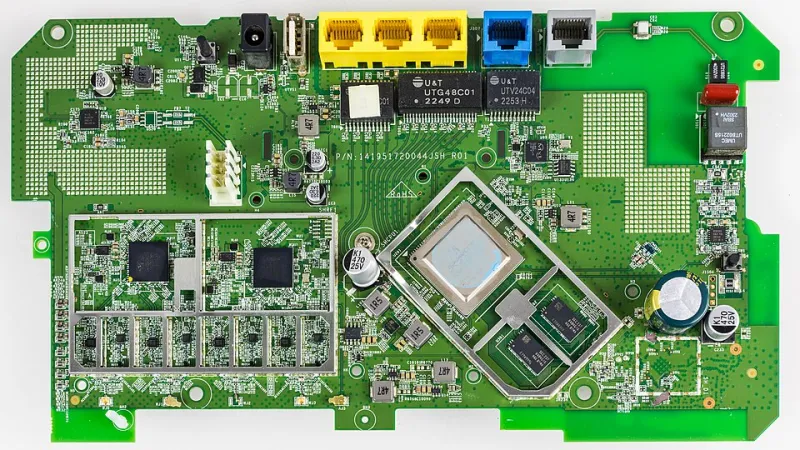
Photo: Raimond Spekking, CC BY-SA 4.0, via Wikimedia Commons
The smart light switch you installed three years ago still works. The motion sensor still detects motion. The smart lock still locks. Yet somehow, you find yourself browsing replacement options — prompted by a notification that your hub software is ending support, a new protocol that your existing devices cannot speak, or a subscription tier that now costs twice what it did at purchase and delivers half the features without an upgrade.
This is not coincidence. It is design.
The smart home industry has developed a remarkably sophisticated apparatus for converting functional hardware into perceived liabilities. Understanding the mechanisms behind this apparatus is the first step toward making upgrade decisions based on genuine necessity rather than manufactured urgency.
The Three Pillars of Smart Home Obsolescence
1. Subscription Dependency
The most direct mechanism is the subscription model. Devices that were sold — and priced — as standalone products are increasingly tethered to recurring fees that unlock core functionality. When those fees increase, or when the free tier is restructured to remove previously standard features, the effective cost of keeping an existing device rises without any change to the hardware itself.
Ring's evolution is instructive. The video doorbell was initially sold as a largely self-contained product with local notification capabilities. Over successive years, cloud storage — the feature that makes a video doorbell genuinely useful — migrated behind a subscription paywall. Customers who purchased original Ring devices on the premise of basic functionality found themselves facing a recurring fee to maintain the experience they had paid for at the point of sale.
Nest's transition following Google's acquisition followed a similar trajectory. Features that had been included in the device's base functionality were restructured into the Nest Aware subscription tier, effectively raising the total cost of ownership for existing hardware.
This pattern is not limited to any single manufacturer. It reflects a structural shift in how the smart home industry accounts for revenue: hardware margins are thin and one-time, while subscription revenue is recurring, predictable, and scalable.
2. Ecosystem Lock-In and Compatibility Breaks
The second mechanism operates at the platform level. Smart home ecosystems — the software environments that allow devices from different manufacturers to communicate and be managed centrally — are not static. They evolve, deprecate older protocols, and periodically restructure their compatibility requirements in ways that leave older devices stranded.
The migration from Zigbee and Z-Wave to the Matter standard is a contemporary example. Matter represents a genuine improvement in interoperability, but the transition has created a compatibility gap. Devices manufactured before Matter's widespread adoption in 2022 and 2023 may not support the standard natively, and while some manufacturers have released firmware updates to add Matter compatibility to existing hardware, many have not — or have restricted the upgrade to newer hardware revisions only.
Similarly, when SmartThings restructured its platform in 2020 and 2021, a substantial number of third-party device integrations were broken or deprecated, requiring users to either accept reduced functionality or replace hardware that was otherwise performing correctly.
These compatibility breaks are rarely the result of technical necessity. They are, more accurately, the result of product roadmap decisions in which backward compatibility with older hardware is weighed against the revenue opportunity of a replacement cycle — and the replacement cycle frequently wins.
3. Artificial Feature Stratification
The third mechanism is subtler: the deliberate withholding of software features from hardware that is technically capable of supporting them. A smart camera released in 2021 may have the processing capability to run on-device person detection — a feature that competing platforms offer at no additional cost — but the manufacturer may choose to offer that capability only on newer hardware or only behind a subscription tier.
This practice is difficult to document definitively, because the line between genuine hardware limitations and artificial feature stratification is not always visible to the consumer. However, the frequency with which features announced for a new device generation turn out to be software-level capabilities that existing hardware could theoretically support is a pattern worth noting.
Auditing Your Own Upgrade Decisions
The practical response to this dynamic is a structured approach to evaluating upgrade prompts — one that separates genuine obsolescence from manufactured urgency.
Ask what has actually changed. When a manufacturer announces that a device is approaching end-of-life, the relevant question is not whether the device will stop working, but whether it will stop performing its core function adequately. A smart plug that controls a lamp does not require continued cloud support to do its job if it can be reprogrammed to operate locally.
Check for third-party firmware options. For devices built on common hardware platforms, community-developed firmware frequently extends functional lifespans well beyond the manufacturer's support window. Home Assistant — an open-source home automation platform with a large and active US user community — supports an extensive library of devices that manufacturers have officially deprecated, often with more capable local-processing features than the original firmware provided.
Evaluate the subscription math honestly. Before renewing a subscription to maintain a device's functionality, calculate the total cost of ownership: the original device price plus cumulative subscription fees over the device's realistic lifespan. In many cases, this total exceeds the cost of a competing device with no subscription requirement.
Distinguish security deprecation from feature deprecation. This is the one category where an upgrade may be genuinely warranted. A device that no longer receives security patches is a legitimate network liability, particularly for devices with microphones, cameras, or persistent internet connections. Security end-of-life is a valid reason to replace hardware. Feature end-of-life generally is not.
Extending Device Lifespans: Practical Options
For homeowners committed to resisting unnecessary replacement cycles, several strategies have demonstrated practical effectiveness:
- Home Assistant integration: For technically inclined users, migrating device management to Home Assistant removes dependency on manufacturer cloud platforms entirely, eliminating the primary leverage point for forced upgrades.
- Local API exploitation: Many smart devices expose local APIs that allow direct control without cloud routing. Tools such as LocalTuya (for Tuya-based devices) and the HomeKit Accessory Protocol enable local control for devices whose manufacturers have deprecated cloud services.
- Protocol bridging: Devices that speak older protocols such as Zigbee or Z-Wave can be integrated into Matter-compatible ecosystems through protocol bridges, extending their functional compatibility without hardware replacement.
- Community forums: Platforms such as Reddit's r/homeautomation and the Home Assistant community forums maintain active documentation of workarounds for deprecated devices, often developed within days of a manufacturer's end-of-life announcement.
Knowing When an Upgrade Is Genuinely Warranted
None of this is to suggest that smart home hardware should never be replaced. Genuine capability improvements — energy efficiency gains, substantially improved reliability, meaningful new functionality — can justify replacement on their merits. The test is straightforward: if the case for replacement rests primarily on manufacturer messaging, subscription restructuring, or ecosystem pressure rather than on a concrete improvement to your daily experience, skepticism is warranted.
The smart home industry's upgrade cycle is, at its core, a revenue mechanism. Treating it as such — evaluating each upgrade prompt with the same scrutiny you would apply to any significant purchase — is the most effective tool available to the informed consumer. Your three-year-old smart switch almost certainly still works. The question worth asking is whether anyone has given you a genuinely good reason to replace it.